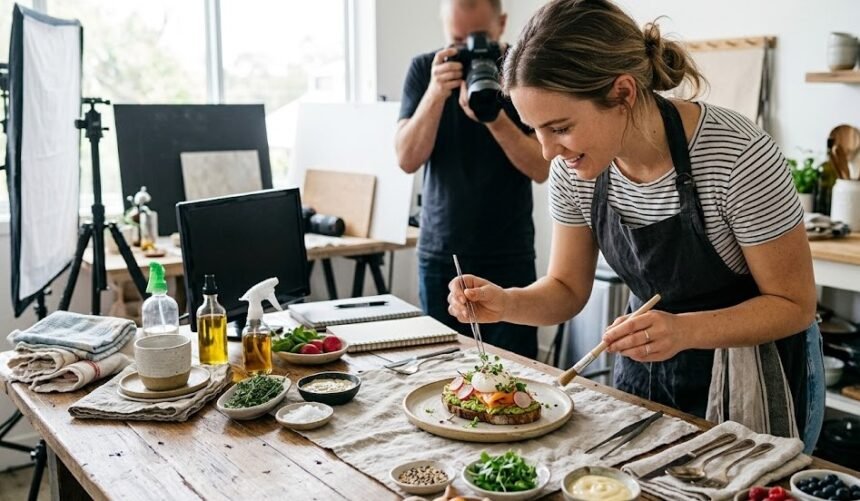
A food stylist is a creative professional who prepares and presents food in a way that looks visually appealing for photography, advertising, television, and digital media. The main focus of a food stylist is not just cooking but making food look perfect, fresh, and attractive on camera. They carefully arrange ingredients, control textures, and enhance colors so that the final image captures attention and increases appetite appeal. Food stylists often work with photographers, chefs, and marketing teams to create high-quality food visuals used in cookbooks, restaurant menus, and commercials.
Food stylists play an important role in the food and media industry because visual presentation strongly influences customer behavior. A well-styled dish can make people want to try a product even before tasting it. This profession requires a strong understanding of food behavior under different lighting conditions, as well as creativity to design eye-catching compositions. In modern digital marketing, the demand for skilled food stylists has increased significantly due to the rise of social media food content and online advertising.
Roles and Responsibilities of a Food Stylist
The primary responsibility of a food stylist is to make food look as appealing as possible for visual media. They prepare dishes in a way that highlights texture, color, and freshness. A food stylist carefully selects ingredients, cooks or modifies dishes, and arranges them artistically for the camera. They also ensure that food remains visually attractive throughout long photo or video shoots.
In addition to preparation, food stylists collaborate closely with photographers and art directors to achieve the desired visual outcome. They may adjust lighting effects on food, use props, and sometimes even replace ingredients with visually stable alternatives to maintain appearance under studio conditions. Their role is both artistic and technical, requiring attention to detail and strong coordination skills during production.
Essential Skills Required
A successful food stylist needs a combination of culinary knowledge and artistic ability. Creativity is essential because every dish must be visually designed to attract attention. A food stylist must also understand food preparation techniques to know how ingredients behave under different conditions, such as heat, light, or time exposure.
Attention to detail is another critical skill, as even small imperfections can affect the final image. Communication skills are also important because food stylists work in teams with photographers, chefs, and marketing professionals. Time management is equally necessary since food styling projects often operate under tight deadlines during photo or video shoots.
Tools and Techniques Used in Food Styling
Food stylists use a variety of tools to create visually perfect dishes. These may include brushes, tweezers, spray bottles, and specialized lighting tools. A food stylist also uses oils, sauces, and steam effects to enhance freshness and texture in images. Sometimes non-edible materials are used to maintain structure during long shoots.
Techniques in food styling involve careful layering, color balancing, and strategic placement of ingredients. For example, steam may be artificially added to hot dishes, or ice cream may be replaced with more stable substitutes during photography. These techniques help ensure that the food looks perfect under studio conditions for extended periods.
Education and Career Path
There is no fixed academic path to becoming a food stylist, but most professionals come from culinary arts, hospitality, or visual arts backgrounds. Many start their careers as chefs, bakers, or photographers before transitioning into food styling. A food stylist builds expertise through hands-on experience rather than formal education alone.
Workshops, internships, and assistant roles in food photography studios are common entry points into this career. Over time, professionals develop a portfolio that showcases their styling skills. This portfolio becomes essential for securing freelance projects or full-time positions in media, advertising, or publishing industries.
Salary and Job Opportunities
The salary of a food stylist varies depending on experience, location, and type of projects. Entry-level stylists may start with smaller assignments, while experienced professionals can earn significantly more through commercial advertising and brand collaborations. A food stylist working in major media or advertising agencies typically earns higher income compared to freelance beginners.
Job opportunities are available in advertising agencies, publishing houses, restaurants, food brands, and digital media companies. With the rise of social media marketing and food content creation, demand for food stylists is steadily increasing across global markets.
Challenges in Food Styling
Food styling comes with several challenges, mainly because food is perishable and changes quickly under lighting and temperature conditions. A food stylist must work efficiently to maintain the appearance of food during long shoots. Time pressure is a constant challenge in this profession.
Another challenge is balancing creativity with client expectations. Clients may have specific visual requirements, and stylists must adjust their artistic ideas accordingly. Maintaining consistency, freshness, and realism while working under strict deadlines can be demanding but is part of the professional responsibility.
Conclusion
A food stylist plays a vital role in the visual presentation of food across media, advertising, and digital platforms. The focus keyword food stylist represents a career that blends creativity, culinary knowledge, and technical skill. From preparing visually appealing dishes to collaborating with photographers and brands, food stylists help shape how food is perceived by audiences. As digital marketing continues to grow, the demand for skilled food stylists is expected to increase, making it a promising and creative career path.
FAQs
What does a food stylist do?
A food stylist prepares and arranges food to make it look attractive for photos, ads, and media.
Do food stylists need cooking skills?
Yes, basic culinary knowledge is very important in this profession.
Where do food stylists work?
They work in advertising agencies, media companies, restaurants, and publishing houses.
Is food styling a good career?
Yes, it is a growing creative field with increasing demand in digital and food marketing industries.