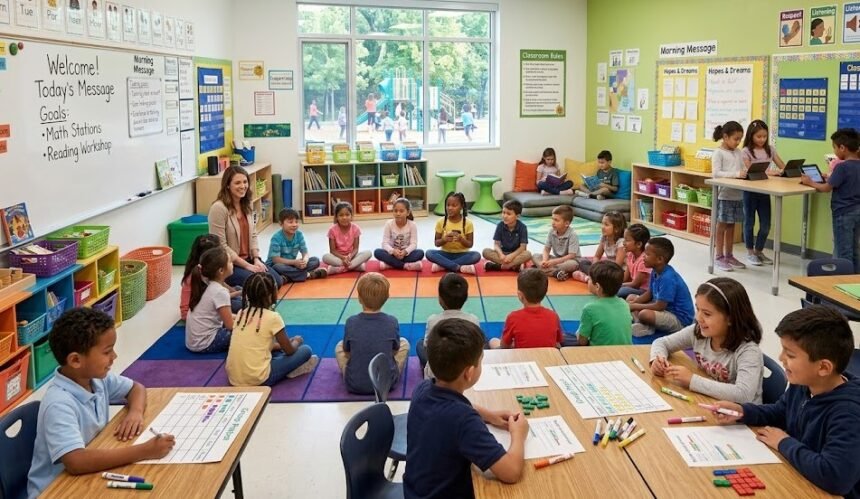
The responsive classroom approach is built on the idea that academic learning and social-emotional development are deeply connected. It emphasizes that students learn best when they feel safe, respected, and emotionally supported in their classroom environment. Teachers using this approach focus on creating a structured and caring space where students are encouraged to participate actively and take responsibility for their own learning. Instead of relying only on discipline and punishment, the method promotes positive behavior through guidance, modeling, and encouragement, helping students develop both academic and life skills together.
Key Teaching Practices in Responsive Classroom
The responsive classroom approach uses a variety of teaching practices that focus on active learning and student engagement. Teachers encourage students to participate in discussions, group activities, and hands-on tasks that make learning more meaningful and interactive. Instead of simply delivering lectures, teachers act as facilitators who guide students through exploration and problem-solving. Another important practice is the use of positive teacher language, where instructions are given in a respectful and encouraging way. This helps students understand expectations clearly while also building confidence and improving classroom behavior over time.
Morning Meeting & Classroom Community Building
The responsive classroom places strong importance on building a sense of community through daily routines like the Morning Meeting. This structured activity helps students start the day by greeting each other, sharing thoughts, and participating in short group interactions. It creates a welcoming environment where students feel included and valued. Over time, this routine strengthens trust among classmates and improves communication skills. Along with Morning Meetings, teachers also use reflection and closing activities to help students process their day, which supports emotional balance and a stronger classroom connection.
Classroom Management Strategies
The responsive classroom approach focuses on proactive classroom management that prevents problems before they occur rather than reacting to them afterward. Teachers set clear expectations, routines, and consistent procedures so students know exactly what is expected of them throughout the day. Instead of harsh punishments, the approach uses logical consequences that help students understand the impact of their behavior and encourage them to make better choices. This method creates a calm and structured learning environment where students feel secure, and teachers can focus more on teaching rather than constant discipline.
Benefits for Students and Teachers
The responsive classroom approach provides significant benefits for both students and teachers by improving the overall learning environment. Students develop stronger social skills, better emotional control, and increased academic performance because they feel safe and supported in class. They also become more confident in expressing ideas and working with others. For teachers, this approach reduces stress and classroom disruptions, making it easier to manage lessons effectively. A positive classroom atmosphere leads to better relationships, higher engagement, and a more productive teaching and learning experience for everyone involved.
Real Classroom Example / Case Study
In a responsive classroom, a typical school day might begin with a Morning Meeting where students greet each other, share experiences, and participate in a short group activity. This simple routine helps create a positive and connected classroom atmosphere right from the start. During lessons, students often work in groups to solve problems and discuss ideas, which encourages collaboration and active participation. When conflicts arise, teachers guide students to talk through issues calmly and find fair solutions instead of using punishment. Over time, this approach builds stronger relationships, improves behavior, and increases student engagement in learning.
Implementation Tips for Teachers
The responsive classroom approach can be introduced gradually to ensure smooth adoption in any school setting. Teachers are encouraged to start with one or two practices, such as Morning Meetings or positive teacher language, before expanding into a full system. Consistency is very important because students need time to understand and adapt to new routines and expectations. Teachers should also model respectful and responsible behavior, as students learn best by observing actions. Working collaboratively with other teachers and sharing strategies can further improve implementation and help create a unified and supportive school environment.
Conclusion
The responsive classroom approach is a powerful and practical method for creating a positive, structured, and engaging learning environment. It focuses on balancing academic learning with social-emotional development, helping students grow not only in knowledge but also in behavior, confidence, and responsibility. By building strong relationships, using consistent routines, and encouraging respectful communication, this approach transforms the classroom into a supportive community where students feel safe and motivated to learn. Over time, it benefits both students and teachers by improving engagement, reducing disruptions, and making the learning process more effective and meaningful.
FAQs
Q1: What is the main goal of a responsive classroom?
The main goal is to create a safe and respectful learning environment that supports both academic and social-emotional growth.
Q2: How does a responsive classroom improve student behavior?
It uses positive language, clear routines, and logical consequences instead of punishment, helping students make better choices.
Q3: What is included in a Morning Meeting?
It includes greeting, sharing, group activities, and a short message to build classroom community.
Q4: Is the responsive classroom method suitable for all grades?
Yes, it can be adapted for different grade levels, especially elementary and middle school classrooms.