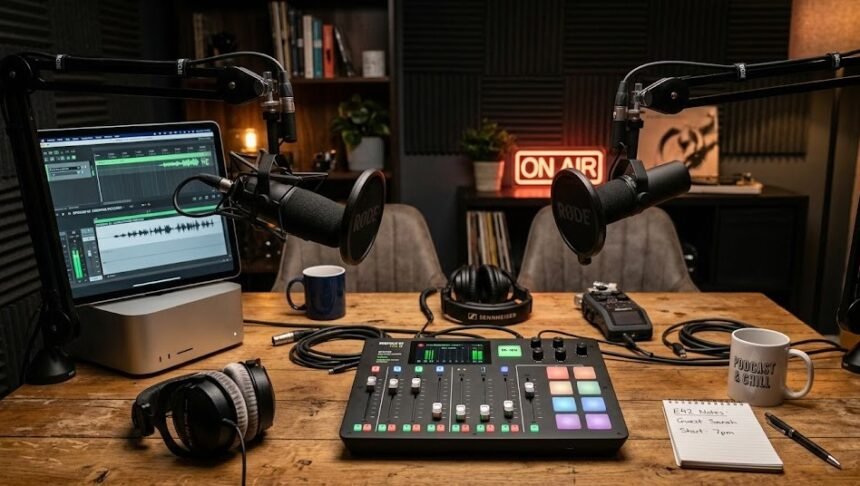
For anyone starting a podcast, choosing the right podcast equipment can feel confusing at first, but the basics are actually quite simple. You don’t need a full studio setup to begin recording; instead, you need a small set of reliable tools that ensure clear audio and a smooth workflow. The essential equipment includes a good microphone, headphones for monitoring sound, and a basic recording device like a laptop or smartphone. These three items form the foundation of any podcast setup and are enough to get started with decent quality recordings.
Beyond the basics, beginners should also consider a few supporting tools that improve overall production quality. A pop filter helps reduce harsh breathing sounds, while a stable microphone stand keeps your recording consistent and hands-free. Even though these items may seem small, they play an important role in making your podcast sound more professional. The key idea is to start simple, focus on clarity, and gradually upgrade your podcast equipment as your audience grows and your needs become more advanced.
Microphones Explained (Types & Recommendations)
The microphone is the most important part of your podcast equipment because it directly captures your voice. If the microphone quality is poor, no amount of editing can fully fix the sound. There are two main types of microphones used in podcasting: USB microphones and XLR microphones. USB microphones are plug-and-play, meaning you can connect them directly to your computer without extra gear. They are ideal for beginners who want a simple and affordable setup. On the other hand, XLR microphones are used in more professional setups and require an audio interface, but they deliver higher sound quality and better control over audio levels.
When choosing a microphone, it’s important to consider your recording environment. Dynamic microphones are highly recommended for home setups because they reduce background noise and focus mainly on your voice. This makes them perfect for rooms that are not fully soundproofed. Condenser microphones, while more sensitive and detailed, tend to pick up more room noise, so they are better suited for treated studio spaces. Selecting the right microphone as part of your podcast equipment setup ensures your voice sounds clear, natural, and engaging for your listeners.
Audio Interfaces & Mixers
An audio interface is an important part of advanced podcast equipment, especially if you are using an XLR microphone. It acts as a bridge between your microphone and your computer, converting analog sound into digital audio. Without it, XLR microphones cannot function properly. Audio interfaces also help improve sound quality by giving you more control over gain levels, reducing distortion, and ensuring your voice is recorded cleanly. For beginners planning to grow into professional podcasting, an audio interface is a smart long-term investment.
Mixers go a step further by allowing you to control multiple audio sources at once. This is especially useful for podcasts with multiple hosts or guest interviews. With a mixer, you can adjust volume levels in real time, balance voices, and even add basic sound effects. While not necessary for beginners, mixers become valuable as your podcast production becomes more complex. Together, audio interfaces and mixers enhance the flexibility and control of your podcast equipment, making your recordings sound more polished and studio-like.
Headphones & Monitoring
Headphones are a crucial part of podcast equipment because they allow you to hear exactly what your audience will hear. Without proper monitoring, you may miss background noise, echo, or audio imbalances while recording. Closed-back headphones are especially recommended for podcasting because they prevent sound leakage and provide accurate audio feedback. This helps you stay focused on your voice quality and ensures that every recording is clean and consistent.
Monitoring your audio in real time also helps you catch problems early, saving time during editing. For example, you can immediately notice if your microphone is too quiet, if there is distortion, or if background noise is interfering with your recording. Professional podcasters rely on headphones throughout the entire recording process because they act as a quality control tool. In short, good headphones are not just an accessory—they are an essential part of your podcast equipment setup that improves both performance and production quality.
Recording & Editing Software
Recording and editing software is a key part of podcast equipment because it turns raw audio into a finished episode. Recording software captures your voice, while editing tools help you clean up mistakes, remove background noise, and improve overall sound quality. Beginners often start with simple, free tools like Audacity or GarageBand, which offer enough features to produce a professional-sounding podcast without a steep learning curve. As you grow, you may move to advanced software like Adobe Audition or cloud-based platforms that support remote recording.
Editing software is also where your podcast truly takes shape. You can cut long pauses, adjust volume levels, and even add intro music or sound effects to make your content more engaging. Many modern podcasters also use online recording platforms that allow guests to join from anywhere in the world, which is especially useful for interview-style shows. Choosing the right software ensures your podcast equipment setup is complete and gives you full control over the final sound of your episodes.
Optional Accessories for Better Sound
Optional accessories may not be the core of podcast equipment, but they can significantly improve the overall sound quality and recording experience. One of the most common accessories is a pop filter, which reduces harsh “P” and “B” sounds that can distort audio. Another useful tool is a shock mount, which prevents vibrations from your desk or stand from being picked up by the microphone. These small additions help create a smoother and more professional listening experience.
Acoustic treatment is another upgrade that many podcasters consider as they grow. Simple foam panels or even soft furnishings in a room can reduce echo and improve sound clarity. A stable microphone boom arm is also helpful because it keeps your mic in the correct position and reduces handling noise. While these accessories are not required for beginners, they become valuable as you refine your podcast equipment setup and aim for a more studio-quality sound.
Budget-Friendly Podcast Setup Guide
Building a podcast does not require expensive gear, and a budget-friendly podcast equipment setup can still produce excellent results if chosen wisely. Many beginners successfully start with just a USB microphone, basic headphones, and free recording software. This simple combination is often enough to create clear and professional audio without overwhelming costs. The key is to focus on quality over quantity and invest in the most important tool first—the microphone.
As your podcast grows, you can gradually upgrade your equipment without spending a large amount upfront. For example, you might start with a USB mic and later move to an XLR setup with an audio interface for better control and sound quality. Adding accessories like a pop filter or mic stand can also improve your setup at a low cost. The idea behind a budget-friendly podcast equipment plan is to start small, stay consistent, and improve step by step as your audience and confidence grow.
Conclusion
In conclusion, building a successful podcast starts with choosing the right podcast equipment, but it does not have to be complicated or expensive. A simple setup with a good microphone, headphones, and basic recording software is enough to launch your first episodes with confidence. As you grow, you can upgrade your tools step by step, adding audio interfaces, mixers, and accessories to improve sound quality and production value. The most important factor is not how expensive your gear is, but how clearly and consistently you deliver your content.
A well-planned podcast equipment setup helps you sound professional, build trust with listeners, and stand out in a competitive space. By focusing on clear audio and steady improvement, you can create a podcast that feels polished and engaging from the very beginning.
FAQs
1. What is the most important podcast equipment for beginners?
A good microphone is the most important because it directly affects sound quality.
2. Do I need expensive equipment to start a podcast?
No, you can start with basic, affordable tools and upgrade later as your podcast grows.
3. Can I use my phone for podcast recording?
Yes, but a dedicated microphone will give much better sound quality.
4. What software is best for beginners?
Free tools like Audacity or GarageBand are great starting options for new podcasters.