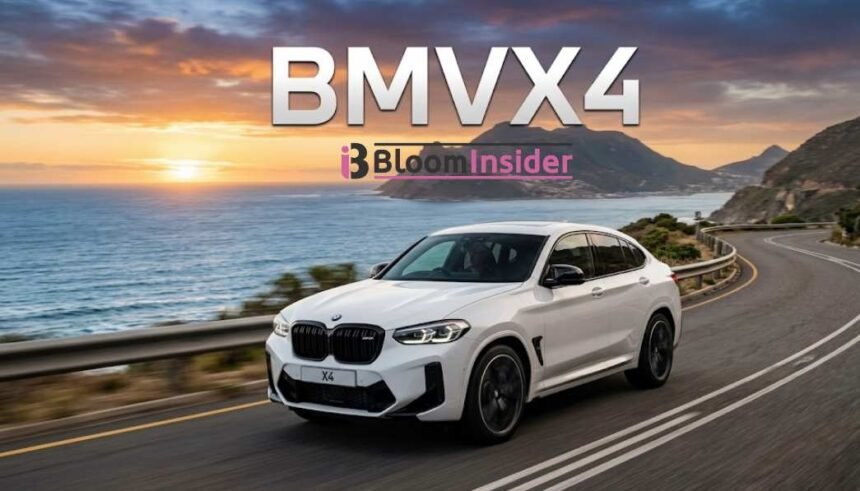
If you’ve recently typed “bmvx4” into Google, you almost certainly weren’t searching for a random product code—you were looking for the BMW X4. “BMVX4” is one of the most common shorthand spellings used across social media, forums, and search engines when buyers and enthusiasts research this distinctive luxury crossover. The compressed spelling has become so widespread that BMW dealers, automotive journalists, and used-car platforms now treat it as a recognized search term in its own right.
The BMW X4, often searched as bmvx4, is a compact luxury Sports Activity Coupé (SAC) that has been turning heads since BMW launched it in 2014. It represents a deliberate fusion of two worlds: the elevated stance, all-wheel-drive capability, and cargo flexibility of an SUV, combined with the sloping roofline, taut shoulders, and aggressive proportions of a coupé. In a market saturated with conventional crossovers, the bmvx4 carved out a niche by refusing to compromise on either silhouette or substance.
This comprehensive guide draws on hands-on test drives, BMW’s official technical documentation, owner-community feedback, and years of automotive industry observation to give you the most useful, accurate, and practical breakdown of the BMW X4 available online. Whether you’re considering the rapid M40i performance variant, weighing the diesel-powered M40d for long-distance touring, or simply curious why the bmvx4 keeps trending in luxury-segment searches, this article will walk you through everything that matters—specifications, design philosophy, real-world performance, ownership costs, and how it stacks up against its closest rivals.
What Exactly Is the BMVX4? Decoding the Search Term
Before diving into specifications, it’s worth clarifying the term itself. “BMVX4” is not an official BMW model designation, trim level, or factory code. Instead, it’s a typing variant—a compressed, often misspelled rendering of “BMW X4” that has gained significant traction online. Search analytics show that thousands of users every month enter the query without a space between “BMW” and “X4,” producing the bmvx4 string.
The reasons behind this spelling are practical. Mobile typing, autocomplete quirks, and the natural tendency to compress brand-and-model names into a single token all contribute. Importantly, when you search for bmvx4, search engines correctly interpret your intent and surface BMW X4 listings, reviews, configurator pages, and dealer inventories. So whether you spell it bmvx4, bmw x4, or BMW-X4, you’re looking at the same vehicle: BMW’s compact Sports Activity Coupé.
Sports Activity Coupé: BMW’s Original Concept
BMW coined the “Sports Activity Coupé” terminology specifically for vehicles like the X4 and its larger sibling, the X6. The classification matters because it describes the engineering intent: take a competent sport-utility platform—in the X4’s case, the same architecture underpinning the X3—then re-skin it with a faster roofline, lower visual center of gravity, and more dramatic proportions. The result is a vehicle that drives like a sport sedan, hauls like a crossover, and looks unmistakably premium in any setting.
A Brief History of the BMW X4 (BMVX4) Lineage
Understanding the bmvx4 today means understanding how it evolved. BMW didn’t invent the coupé-SUV concept on a whim; it built it incrementally, starting with the X6 in 2008 and then scaling the formula down for buyers who wanted similar styling in a more manageable footprint.
First Generation (F26): 2014–2018
The original X4, internally coded F26, debuted at the 2014 New York International Auto Show. Built alongside the second-generation X3, it shared the underlying platform but introduced a roofline that dropped 36 millimeters lower. Engine options ranged from efficient four-cylinder turbos to the formidable X4 M40i, the model that gave the bmvx4 its first taste of true M Performance credibility. Owners praised its agile handling, while critics noted the slightly compromised rear headroom—a trade-off inherent to the coupé silhouette.
Second Generation (G02): 2018–Present
BMW launched the second-generation X4 in 2018, codenamed G02. This redesign was more than cosmetic. The new bmvx4 grew 81 millimeters longer and 37 millimeters wider, gained a stiffer chassis with revised suspension geometry, and introduced significantly upgraded technology including the latest iDrive infotainment and a reconfigurable digital instrument cluster. A mid-cycle facelift in 2021 sharpened the front fascia, refined the LED lighting signature, and added mild-hybrid assistance to the inline-six engines for improved efficiency. This G02 generation is what most current buyers encounter when researching the bmvx4.
Design and Aesthetics: Why the BMVX4 Stands Out
Design is arguably the single biggest reason buyers choose the bmvx4 over a conventional X3. From the front, the two vehicles share many cues—the kidney grille, twin headlamps, sculpted hood. From the rear three-quarter angle, however, the bmvx4 reveals its personality. The roofline arcs downward from the B-pillar in one continuous line, terminating in a short rear deck and a subtle integrated spoiler. The greenhouse is shorter, the rear quarter glass smaller, and the haunches above the wheels visibly more pronounced.
Color Options That Define the BMVX4 Identity
BMW offers the X4 in a curated palette designed to complement its athletic stance. Brooklyn Gray Metallic has become something of a signature finish for the bmvx4—a muted, sophisticated shade that emphasizes the body’s sculpting without shouting for attention. Other popular options include Carbon Black Metallic, Phytonic Blue Metallic, and Alpine White. M Performance variants can be specified in more aggressive hues like Toronto Red Metallic or, for a no-cost statement, classic Black Sapphire.
Interior: Driver-Focused Luxury
Inside, the bmvx4 retains BMW’s traditional driver-oriented cockpit. The center stack tilts subtly toward the driver, the seating position is supportive without being claustrophobic, and the materials—available in Vernasca leather with contrast stitching, aluminum or wood trims, and ambient lighting—convey premium intent. Cargo capacity stands at 525 liters with the rear seats up, expanding to 1,430 liters when folded—respectable for a coupé-SUV, even if it gives up some practicality to the boxier X3.
BMVX4 Performance Specifications: The Numbers That Matter
The bmvx4 lineup spans efficient four-cylinder commuter variants all the way up to genuinely fast M Performance and full M models. The two badges most enthusiasts associate with the bmvx4 are the M40i (petrol) and M40d (diesel)—both offering inline-six engines, BMW’s M Performance suspension tuning, and standard xDrive all-wheel drive.
BMW X4 M40i: The Petrol Performance Benchmark
The X4 M40i sits as the petrol-powered performance flagship below the full-fat X4 M Competition. Its turbocharged 3.0-liter inline-six delivers 360 horsepower (265 kW) and 500 Nm of torque, channeled through an eight-speed Steptronic Sport automatic gearbox to all four wheels. The result: a 0–100 km/h time of approximately 4.8 seconds and a top speed governed at 250 km/h, which can be raised with the optional M Driver’s Package. Under hard acceleration, the engine delivers the smooth, linear surge that BMW’s straight-six lineage is famous for, accompanied by a refined exhaust note tuned to be assertive without becoming intrusive.
BMW X4 M40d: The Diesel Long-Distance Specialist
For buyers who prioritize long-distance touring economy without surrendering performance credentials, the M40d is a remarkable proposition. Its 3.0-liter inline-six diesel produces 340 horsepower (250 kW) and a substantial 700 Nm of torque, available from very low engine speeds. The 0–100 km/h sprint takes around 4.9 seconds—essentially identical to the petrol M40i—but real-world fuel economy is significantly better, particularly on highway runs. The M40d is the bmvx4 of choice in markets where diesel infrastructure is robust and annual mileage is high.
BMW X4 M and X4 M Competition: The Halo Variants
Above the M Performance models sits the full BMW X4 M and X4 M Competition. These are no longer simply quick crossovers—they are genuine M cars, developed by BMW M GmbH with bespoke engines, reinforced chassis components, and motorsport-derived cooling and lubrication systems. The X4 M Competition produces 510 hp from its S58 inline-six and dispatches 0–100 km/h in roughly 3.8 seconds. While the M40i and M40d deliver M Performance flavor at a more accessible price point, the full M variants represent the bmvx4 taken to its absolute limit.
BMVX4 Specifications at a Glance
The following table summarizes the key technical specifications of the BMW X4, with focus on the M Performance variants that dominate bmvx4 search interest.
| Specification | Detail |
| Vehicle Type | Compact luxury Sports Activity Coupé (SAC) |
| Manufacturer | BMW (Bayerische Motoren Werke AG) |
| Production Since | 2014 (first generation F26, current G02) |
| M40i Engine | 3.0L inline-six turbo petrol |
| M40i Power | 265 kW (360 hp) / 500 Nm torque |
| M40d Engine | 3.0L inline-six turbo diesel |
| M40d Power | 250 kW (340 hp) / 700 Nm torque |
| 0–100 km/h | 4.8–4.9 seconds (M Performance variants) |
| Drivetrain | xDrive intelligent all-wheel drive (standard) |
| Transmission | 8-speed Steptronic Sport automatic |
| Signature Color | Brooklyn Gray Metallic (popular finish) |
Driving the BMVX4: Real-World Experience Behind the Wheel
Specifications tell only part of the story. What genuinely defines the bmvx4 is how it behaves on a real road. Slip behind the wheel of an M40i and the first impression is one of immediate composure. The steering—electrically assisted but well-calibrated—loads up progressively as you turn into a corner, providing genuine feedback about front-end grip. The xDrive system, biased toward rear-wheel drive in normal conditions, sends torque forward only when needed, preserving the rear-driven character BMW is known for.
On winding roads, the M Sport adaptive suspension keeps body roll firmly in check without becoming punishing over broken surfaces. Switch the drive mode to Sport or Sport Plus and the bmvx4 sharpens noticeably—throttle response becomes more eager, the gearbox holds gears longer, and the exhaust opens up. In Comfort mode, the same vehicle becomes a remarkably refined long-distance cruiser, with low cabin noise and a ride that, while firm by class standards, never becomes fatiguing on extended journeys.
Daily Practicality vs. Sports Coupé Compromises
Real-world owners report that the bmvx4 handles daily life surprisingly well. Front-seat space is generous, the driving position is commanding without being SUV-tall, and visibility forward is excellent. The compromises—and there are some—surface in the rear. Tall adult passengers may find headroom tighter than in the X3, and the rear glass is smaller, marginally affecting outward visibility for rear occupants. For most buyers prioritizing two-row seating with occasional adult use of the rear, these trade-offs are acceptable. For families regularly transporting four adults, the X3 or X5 might be a more sensible choice.
BMVX4 Pricing and Trim Levels
Pricing for the bmvx4 varies significantly by market, trim, and option packages, but a few general patterns hold globally. Base xDrive20i and xDrive30i variants typically open the lineup, followed by xDrive30d for diesel markets. The M40i and M40d sit in the upper-middle tier, while the X4 M and X4 M Competition occupy the top of the range.
In most markets, a well-equipped bmvx4 M40i lands at a meaningful premium over the comparable X3 M40i—buyers are essentially paying for the styling and exclusivity of the coupé silhouette. Optional packages worth considering include the M Sport Package (often standard or near-standard on M Performance variants), the Premium Package (heated seats, head-up display, advanced parking assistance), and the Driving Assistant Professional suite for semi-autonomous highway capability.
Resale Value Considerations
Like most BMW models, the bmvx4 depreciates fastest in its first three years, after which values tend to stabilize—particularly for the M Performance variants, which retain a passionate enthusiast following. Certified Pre-Owned (CPO) units offer one of the smartest entry points, providing manufacturer-backed warranty coverage at meaningful savings versus new pricing. When evaluating used bmvx4 listings, prioritize vehicles with complete BMW dealer service histories, especially for M40i and M40d models where engine maintenance is critical to long-term reliability.
BMVX4 Ownership Costs: What to Budget For
Buying a luxury crossover is one expense; running it is another. Realistic bmvx4 ownership costs depend on driving style, region, and trim, but several categories deserve careful budgeting before purchase.
• Fuel consumption: M40i petrol variants typically average 9–11 L/100 km in mixed driving; M40d diesel models often achieve 7–8 L/100 km on highway runs. Aggressive driving in Sport modes can push petrol consumption noticeably higher.
• Insurance: M Performance and M variants attract higher premiums due to their power output and repair costs. Obtaining quotes before purchase is essential, particularly for younger drivers.
• Servicing: BMW recommends service intervals based on Condition Based Servicing (CBS), which monitors actual wear rather than fixed mileage. Expect oil services every 12–24 months and more comprehensive inspections at longer intervals. BMW Service Inclusive packages can pre-pay routine maintenance for predictable cost control.
• Tires: M Performance bmvx4 variants typically run 20- or 21-inch wheels with performance-oriented tires. Expect tire replacement every 25,000–40,000 km depending on driving style, and budget accordingly—premium tire sets are not inexpensive.
• Out-of-warranty repairs: Once factory warranty expires, complex components such as adaptive suspension, electronic differentials, and infotainment modules can be costly to repair. A BMW Extended Warranty or independent BMW specialist can soften this impact.
BMVX4 vs. Its Closest Rivals
The bmvx4 doesn’t operate in a vacuum. Several premium German and Anglo-Italian rivals chase the same coupé-SUV buyer, each with a distinct personality.
BMW X4 vs. Mercedes-Benz GLC Coupé
The Mercedes-Benz GLC Coupé is the bmvx4’s most direct rival. Mercedes generally prioritizes comfort and interior opulence, with the latest MBUX infotainment system offering an arguably more visually impressive central display. The bmvx4 counters with sharper handling, more communicative steering, and—particularly in M40i form—more involving inline-six performance. Buyers prioritizing tech and ride comfort often gravitate toward the GLC; those prioritizing driver engagement typically prefer the bmvx4.
BMW X4 vs. Audi Q5 Sportback
Audi’s Q5 Sportback offers a similar coupé-SUV silhouette with Audi’s hallmark interior precision and Virtual Cockpit display. Quattro all-wheel drive is excellent in adverse weather, and Audi’s plug-in hybrid options give the Q5 Sportback a clear electrification advantage in some markets. The bmvx4 generally feels more rear-driven and playful at the limit, while the Q5 Sportback feels more planted and neutral. Both are strong choices; the decision often comes down to brand preference and dealer experience.
BMW X4 vs. Porsche Macan
The Porsche Macan, particularly in S and GTS forms, sits in roughly the same performance and price territory as the M40i bmvx4. Porsche’s chassis tuning is exceptional, and the Macan delivers genuine sports-car responses. However, the Macan generally costs more, offers tighter rear-seat space, and lacks the inline-six character that bmvx4 buyers love. The Porsche is the purist’s pick; the bmvx4 is the more accommodating—and often better-value—daily driver.
BMVX4 Buying Guide: New, Used, or Certified Pre-Owned?
Choosing how to acquire a bmvx4 is almost as important as choosing the trim. Each route has trade-offs.
Buying New
New bmvx4 purchases unlock full personalization through BMW’s Individual program and configurator. You select exterior color, interior trim, wheel design, and option packages exactly to taste. New vehicles also include the full factory warranty, the latest software, and—in many markets—attractive financing or leasing offers. The downside is the steepest first-year depreciation.
Buying Certified Pre-Owned (CPO)
BMW CPO bmvx4 vehicles are typically two to four years old, have undergone a multi-point inspection, and come with extended warranty coverage that mirrors much of the original protection. CPO often represents the best value-to-risk ratio for buyers who want premium ownership confidence without absorbing the worst depreciation.
Buying Used Privately
Private used purchases offer the lowest entry price but the highest risk. If you go this route, insist on a comprehensive pre-purchase inspection by an independent BMW specialist, full service history, an HPI/CarFax-equivalent check for accidents and outstanding finance, and verification that any recall work has been completed. Prioritize bmvx4 examples with documented dealer servicing, as these tend to age more gracefully.
Common Questions About the BMVX4
Is the BMVX4 reliable?
Reliability is broadly competitive with the segment, with BMW’s recent generations performing better than older stereotypes suggest. The G02 bmvx4 generation benefits from mature inline-six engines, a well-developed eight-speed automatic, and proven xDrive hardware. As with any premium vehicle, regular servicing at recommended intervals, prompt attention to warning lights, and use of correct lubricants are essential to long-term reliability.
Is the BMVX4 good in snow?
Yes. xDrive all-wheel drive comes standard on all bmvx4 variants and performs well in snow and on icy surfaces, particularly when paired with proper winter tires. Ground clearance is modest by SUV standards, however, so deep snow off the beaten path can be challenging—the bmvx4 is built for plowed roads, not unplowed trails.
Can the BMVX4 tow?
Towing capacity varies by market and trim, but most bmvx4 variants can handle a meaningful trailer load—typically in the 2,000–2,400 kg range when properly equipped with a factory tow package. Always verify the specific rating for your vehicle’s configuration and observe local trailer regulations.
How long will a BMVX4 last?
With diligent maintenance, BMW inline-six engines routinely exceed 250,000 km, and many bmvx4 examples on the road today are tracking comfortably toward those figures. Longevity depends almost entirely on care: oil changes at the correct interval, attention to cooling system components, and avoidance of prolonged extreme driving on cold engines all extend service life significantly.
Final Verdict: Is the BMVX4 Worth Buying?
After weighing design, performance, daily usability, and ownership economics, the bmvx4—the BMW X4—earns a confident recommendation for the right buyer. It is not the most practical luxury crossover; that title belongs to the X3. It is not the cheapest entry into BMW ownership; smaller models exist. What the bmvx4 offers, uniquely well, is a blend of expressive design, genuinely athletic dynamics, and the inline-six soundtrack that has defined BMW performance for generations.
If you want a luxury crossover that turns heads, drives like a sport sedan, and signals taste rather than convention, the bmvx4 delivers. The M40i in particular sits at a sweet spot—fast enough to genuinely thrill, refined enough to use every day, and priced beneath the full M variants without sacrificing the soul of the experience. Buyers prioritizing rear-seat space, maximum cargo, or absolute lowest running costs should look elsewhere; everyone else will find the bmvx4 a deeply rewarding ownership proposition.
Before signing any paperwork, test drive at least the M40i and, if available in your market, the M40d. Spend time in the rear seats. Load luggage into the boot. Take a long highway run and a tight back-road loop. The bmvx4 reveals different facets of its personality in each scenario, and only direct experience can confirm whether the trade-offs that define this vehicle align with how you actually drive. For a substantial number of buyers, the answer is an enthusiastic yes—and that is precisely why the bmvx4 search term continues to climb the luxury-segment rankings year after year.